April 7, 2016 by Rockwatching
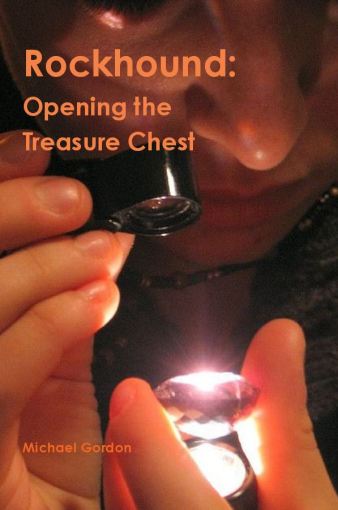
Volume 2 of the ‘Rockhound’ series is now available. This particular volume focuses on the perception of value in mineral resources and the shifting lens through which Ontario’s mineral wealth is seen.
In Rockhound: Opening the Treasure Chest we visit such old collecting classics as the Saranac Zircon Mine, Bear Lake, Grace Lake, Bessemer Mine and Kuehl Lake. The mineral focus is on apatite, rare earths, tremolite, diopside and the more exotic treasures that are displayed at the Bancroft Gemboree. For any rockhound, mineral collector or crystal enthusiast this is without a doubt an invaluable accompaniment to a summer of collecting. Within ‘Rockhound’ you’ll learn how and where to collect. Over 80 mineral locations are detailed along with directions and specifics on the minerals found there.
If you are interested in purchasing a copy or Rockhound: Opening the Treasure Chest visit the Lulu purchasing site here.
Posted in Bancroft, Bancroft gemboree, book on collecting, book on collecting rocks and minerals, book on crystals, book on gemstones, book on rocks and minerals, books, Buy The Book, Canada, Caves, collecting rocks near Bancroft, crystals, environment, gemology, gems, gemstones, geography, geology, industrial archeology, lapidary, mineral collecting, mines in northern Ontario, nature, Nature/Outdoors, ontario, Ontario geography, Ontario's geography, Ontario's geology, rock and mineral, rock collecting, rockhound, rockhounding, rockhounding in Ontario, rocks and minerals, rocks in Ontario | Tagged Bancroft, collecting, crystals, minerals, ontario, rockhound, rocks and minerals, Treasure | 5 Comments »
October 23, 2015 by Rockwatching
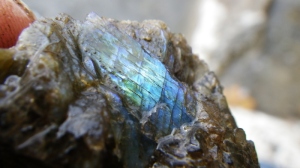
Above: A shard of peristerite from Crystal Lake Ontario. A gem quality feldspar that is found in abundance in the tailings.
In the three volume series, ‘Rockhound’, you’ll explore what it means to collect minerals in the skarns and pegmatites of the north. We’ll travel to forgotten settlements and ghost towns and you’ll visit the famous mining camps of Cobalt, Eldorado and Gowganda. Directions within the ‘Rockhound Series’ will take you to little known deposits that yield some amazing specimens. When you apply what you’ve learned you’ll find crystals and minerals in a diversity of species that will astound you. In the first volume of this series you’ll be shown where to find coltan, amazonite, tourmaline, gold, zircon, silver, beryl, fluorite, titanite and more.
Click here to visit the Rockhoundbook.com website from whence a copy of Rockhound can be purchased.
Whether you’re a serious collector or a casual enthusiast, ‘Rockhound’ will take you where you need to go and show you what you never believed possible in the mines and forests of the north.
Posted in book, books, collecting, crystals, mineral collecting, ontario, rock and mineral, rockhound | Tagged book, books, collecting, crystals, mineral collecting, ontario, rock and mineral, rockhound | 2 Comments »
August 3, 2015 by Rockwatching
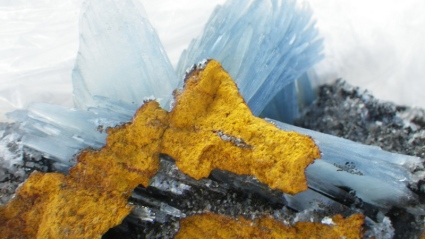
I just attended the Bancroft Gemboree 2015, Canada’s largest gem and mineral show. There are 3 distinct areas where rockhounds can explore their interest, the curling rink and the hockey arena which are both indoors and the outdoors trading stalls. In my experience the trading stalls are the best places to purchase minerals. Dealers come from all across the country, they have incredible stories and the prices are phenomenal. Check out my youtube video on the Bancroft Gemboree here.
Posted in Bancroft, Bancroft gemboree, book on collecting, book on collecting rocks and minerals, book on crystals, book on gemstones, book on rocks and minerals, collecting rocks near Bancroft, environment, fun things to do in toronto, gemology, gems, gemstones, geography, geology, Interesting, looking for gems, Nature/Outdoors, Ontario's geology, picture of, rockhound, rockhounding, rockhounding in Ontario, Rocks & Gems, rocks and minerals, rocks in Ontario | Tagged Bancroft accomodation, Bancroft gemboree, Bancroft Gemboree 2015, Canada's largest, gem, gemboree, minerals in Ontario, rock and mineral, rock and mineral show | Leave a Comment »
July 12, 2015 by Rockwatching
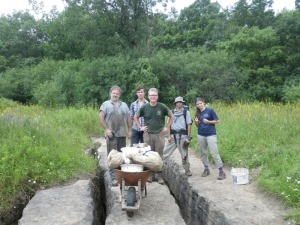
Check out the video about the opening of the unexplored section of Nexus Cave in the Eramosa Karst, a protected karst landscape just outside Hamilton, Ontario. We moved about a ton of boulders and garbage from the bottom of some fissures to expose the openings to a water passage that feeds the cave.
Posted in Caves | Tagged Bancroft, Bancroft gemboree, Book on caving, cave, Eramosa Karst, rockhound | 1 Comment »
April 26, 2015 by Rockwatching
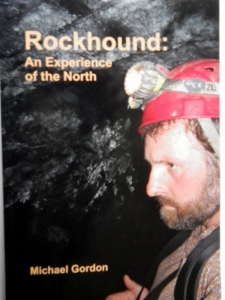
Yes, that is indeed yours truly on the front cover. This is my latest book which is on rock and mineral collecting. As you can see its called ‘Rockhound: an Experience of the North’. This is actually the first of several books in the Rockhound series and it consists of several chapters detailing how to find minerals, identify minerals and the human experience related to that. This first book covers finding gold, feldspar, radioactives, sodalite, apatite, titinite and silver.
As it says on the back cover “In this first volume of rockhound we will explore the mineral world in the context of the whole experience – the deposits, the landscape and the people. whether you are a hard-core collector or a casual enthusiast ‘Rockhound’ will take you to where you want to goand show you what you never believed possible in the mines and forests of the north”.
If rockhounding interests you check out the preview of my book right here – click for a review of Rockhound.
Posted in abandoned mines in Ontario, adventure in Ontario, Bancroft, Bancroft gemboree, book on collecting, book on collecting rocks and minerals, book on crystals, book on gemstones, book on rocks and minerals, books, Buy The Book, Caves, collecting rocks near Bancroft, crystals, gems, gemstones, geography, geology, rock collecting, rockhound, rockhounding, rockhounding in Ontario, rocks and minerals | Tagged Bancroft, book, rock and mineral book, rockhound, rockhounding in Ontario | 5 Comments »
April 26, 2015 by Rockwatching
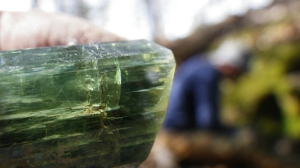 Well as you’ve probably gathered by the above picture, I’ve just discovered some pretty incredible mineral specimens – a pocket of gem quality tremolite at the contact between quartz and calcite veins. Tremolite evolves to actinolite under the right conditions, and sometimes changes to diopside. Anyway, the finer points of the discovery are detailed on my youtube site (caver461) and within the video details are provided for the purchase of my latest book on minerals – ‘Rockhound: An Experience of the North’. In the book I detail how to find gemstones and something of the experience of finding rocks and minerals in the north.
To see purchase details or for a preview, just type the book name into Google and click on the link, it will take you directly to the print company (Lulu), or click this link here for immediate access to the book on Lulu.
Posted in Bancroft, best things to do in Toronto, books, Buy The Book, Canada, collecting rocks near Bancroft, crystals, gemology, gems, gemstones, geography, geology, Interesting, Nature/Outdoors, Ontario geography, Ontario's geography, Ontario's geology, picture of, rock collecting, rockhounding, rockhounding in Ontario, Rocks & Gems, rocks and minerals, rocks in Ontario | Tagged Bancroft, gem, gemology, gemstone, ontario, rocks and minerals | Leave a Comment »
February 22, 2014 by Rockwatching
I recently conducted an interview with Anne Gordon, a well known Canadian travel writer. Anne had just recently returned from Papua New Guinea and in particular, a trip up the Sepik River where she visited local tribes and learned something of the Malagan culture).
See the Papua New Guinea documentary interview with Anne Gordon here
As a travel writer Anne speaks about the benefits of belonging to NATJA and other travel organizations, the benefits such as sponsored trips and the professional development opportunities that are open for travel writing.
As Anne said, “New Guinea is undoubtedly the most exotic and fascinating place she has ever been, there are over 900 tribes scattered throughout the island and an an ecosystem that spreads both above and beneath the surface”. Many of New Guinea’s tribes maintain customs and cultures that hold a special fascination for us in the west. Head hunting and cannibalism still exist in isolated pockets and have been practised quite commonly within the last 100 years.
Anne Gordon’s interview centres around the Sepik River and the carver’s of the Malagan culture, in particular the master carvers of New Ireland, she shows many incredible pictures of the tribes in that area and the tribal culture of New Guinea.
Posted in Caves, documentary, Education, exploration, geography, hiking, history, Interesting, Life, malagan, NATJA Award, New Guinea, New Guniea, Papua New Guinea, paranormal, people, Personal, photo, photos, picture of, PNG, religion, science, Sepik River, strange places, Travel, travel writing | Tagged Anne Gordon, Documentary, malagan, New Guinea, Papua New Guinea, Papua New Guinea documentary, Sepik River, travel writing | 2 Comments »
December 24, 2013 by Rockwatching
We seem to be at the tail end of a most disastrous ice storm. The storm began last Saturday and continued on till Monday morning. Tree limbs were tearing from trunks and crashing down all over Guelph, it was like something out of a disaster movie. It was not possible to even drive down the road without having to weave all over to avoid the debris. We lost power for a few hours, but it appears that there will be over 200,000 people in Toronto who will be cold and dark through Christmas.
For us, the sun is shining now and trees are glittering like forests of diamonds.
See a video of the 2013 ice storm (Guelph) here.
Posted in adventure in Ontario, Adventures, bizzare, Caves, cool ice formations, crazy things, crystals, guelph, ice formations, Interesting, my life, nature, Nature/Outdoors, News, ontario, photo, Photography, photos, picture of, Toronto | Tagged 2013 ice storm, fallen trees, ice storm, ice storm in Guelph, ice storm in Ontario, power out, winter storm | 1 Comment »
December 10, 2013 by Rockwatching
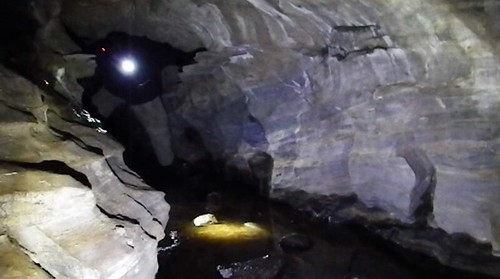
This past weekend Jeff and I visited a spot in the forest where we had found a tunnel this past summer. We had been trying to dig into the tunnel but the bugs were terrible. Now that the ground is heavily laden with snow there is no such problem – now its the cold. Anyway, after about 4 hours of digging and levering frozen boulders we managed to create a hole large enough to look well into our suspected cave and what we saw within was an elliptical shaped tunnel that was plugged by boulders. A small waterfall dropped from the roof of the tunnel and beyond, a chamber in marble.
See video for Snowgof – breathing tunnel here.
We are yet to access the chamber, but with great difficulty Jeff photographed a small segment of the chamber. In his picture you can see a wall of pure white marble and you can hear the water falling within.
Near the entrance the roof is encrusted with frost thus indicating airflow from deeper in the earth. In fact it was the smear of frost on the wall outside the cave that first got us digging there in earnest. Based on its proximity to the edge of a steep slope and no apparent resurgence at its bottom I am left to conclude that the water flowing into the cave must be dropping down deep quite quickly. I suspect that it goes down a shaft such as you see in Twin Trickles Cave.
Spring will reveal what lies beyond.
Posted in adventure in Ontario, backpacking, Bancroft, best things to do in Toronto, book on caves, books, Canada, cave conservation, cave digging, cave diving in ontario, cave formation, Caves, Caves in Canada, caves in Ontario, caving, Caving in Hamilton, Caving in Ontario, cool things to do in toronto, documentary, Education, environment, Eramosa Karst, exploration, extreme sports, FOTEK, fun things to do in toronto, geography, geology, guelph, Hamilton, Interesting, Life, My Book, natural spring, nature, Nature/Outdoors, ontario, Ontario geography, Ontario Underground, Ontario's geography, Ontario's geology, Personal, photo, Photography, photos, picture of, rocks and minerals, rocks in Ontario, rockwatching, searching for caves, sinkholes, sinkholes in Ontario, sports, strange places, things to do in Toronto, Toronto Cave Group, tunnels, underground | Tagged beneath the forest, breathing tunnels, cave in Northern Canada, caving, Caving in Ontario, Northern Ontario, Snogof, winter sports | 2 Comments »
December 2, 2013 by Rockwatching
This past weekend Rob, Jeff and I visited Embryo Cave with the intention of digging out something of the earth plug at the lower end of the cave’s main stream passage.
see video of Cave Exploration in Canada (video) here
lying pressed between the rock and the dirt it was an experience from which I was unable to shake the feeling that it was as though we were returning to mother earth. We dug for some time in the earth as we suspected that in breaching an earthen crest up ahead we would possibly break into tunnel that led onwards and downwards. There appears to be a lower water filled level in this cave. The flowing stream bubbles up in sand part way along the main trunk passage and it sinks again just short of the earthen plug.
Sadly we tired before we got through the dirt, but it was close and next time we visit we will certainly complete the job.
Posted in adventure in Ontario, Adventures, best things to do in Toronto, bizzare, book on caves, Buy The Book, Canada, cave digging, cave diving in ontario, cave formation, Caves, Caves in Canada, caves in Ontario, caving, Caving in Hamilton, Caving in Ontario, documentary, Education, environment, exploration, extreme sports, FOTEK, fun things to do in toronto, geography, geology, guelph, Hamilton, ice formations, Interesting, my life, natural spring, nature, Nature/Outdoors, ontario, ontario caves, Ontario geography, Ontario Underground, Ontario's geography, Ontario's geology, photo, Photography, photos, picture of, rocks and minerals, rocks in Ontario, rockwatching, sinkholes, sinkholes in Ontario, sports, strange places, Toronto Cave Group, tunnels, underground, underground Ontario | Tagged caving, caving books, Caving in Canada, embryo cave, exploring caves in canada, exploring in Canada, video | Leave a Comment »
Older Posts »





 Rockwatching